2026. 05. 15. / LIFE · 4 min read
A Night in Seoul's Hanok — 2026 Public Hanok Night Walk Festival
16 hanoks in Bukchon open at night. Applications close today at 5 PM
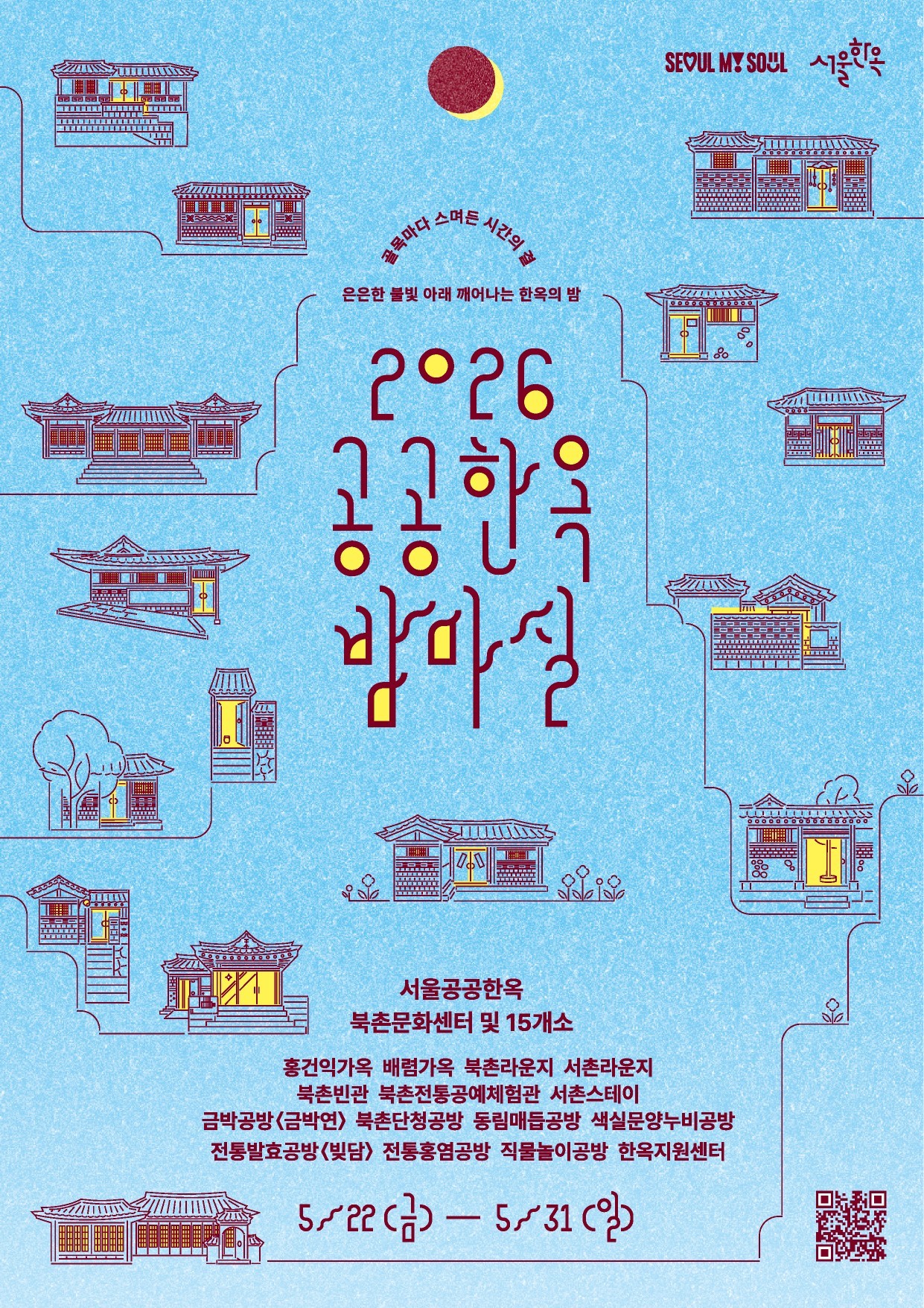
The hanoks in the heart of Seoul are opening at night.
Seoul City is holding the 2026 Public Hanok Night Walk from May 22 to 31. It's a cultural festival where Bukchon hanoks — usually only accessible during the day — open at night for exhibitions, performances, and hands-on programs.
Where Is It?
16 Seoul public hanoks participate, including Bukchon Cultural Center, Hong Geon-ik House, Bae Ryeom House, and Bukchon Lounge.
These spots normally run daytime-only hours, so catching a performance in a hanok courtyard at night hits differently.
What's On?
- Exhibitions
- Performances
- Hanok guided tours
- Hands-on programs
- Special events
Specific schedules for each program can be found on the application page.
How to Apply
Applications close today (May 15) at 5 PM. It's not first-come-first-served — it's a lottery, so as long as you apply by end of day, you're in the draw. Three times the capacity is accepted, then randomly selected, with winners notified by text.
- Application link: Google Form
- Inquiries: 02-741-1033 (Bukchon Cultural Center)
These Hanoks Have a Story
The participating hanoks are not just old houses — each one carries its own history.
Hong Geon-ik House is a registered national cultural heritage site built in the 1930s. It's a classic example of "modern hanok" — traditional Korean timber framing combined with Japanese architectural elements — reflecting the lifestyle of Seoul's middle class in the colonial era.
Bae Ryeom House was the home of painter Bae Ryeom (1911–1968), a pioneer of modern Western-style painting in Korea. Because the artist actually lived here, the house itself has the feel of a work of art.
Bukchon Cultural Center serves as the cultural hub of the Bukchon area. Its hanok-style exhibition halls and open courtyard make it a popular venue for performances and events.
Knowing the story behind each space makes the guided tours hit differently — the commentary suddenly has much more weight.
What Makes Night Different from Day
The gap between a daytime and nighttime visit is bigger than you'd expect.
During the day, crowds move through and the focus tends to be on the architecture — roof lines, details, proportions. At night, traditional lanterns wrap the courtyards and eaves in warm light, completely changing the mood. Stone walls and clay tiles catch the glow and reveal textures you'd never notice in daylight.
Performances in the courtyard carry a different kind of resonance too. Hearing music under an open sky with hanok rooflines as the backdrop is an experience you won't find at any indoor venue.
And late May nights are comfortable — daytime is starting to warm up, but evenings are still cool and easy to walk around in.
Who It's Best For + Practical Tips
For a date: aim for smaller, intimate venues like Hong Geon-ik House. The compact scale makes it easy to explore at your own pace without feeling crowded.
For solo cultural seekers: book a guided tour. A knowledgeable guide will point out details you'd easily walk past on your own.
For families: look for sites with hands-on programs. Check the application page to see which venues have activities suitable for children.
A few practical tips before you go.
- Footwear: you'll be moving between courtyards and uneven stone paths — comfortable sneakers over heels
- Best time of evening: after 8 PM, when the sky is fully dark and the lantern lighting is at its best
- Getting around: the 16 hanoks are clustered around Bukchon, all walkable — worth checking a map in advance
- Crowds: the lottery system caps attendance, so it's noticeably calmer than daytime tourist hours
The festival runs May 22–31, exactly ten days.
If you enjoy nighttime walks through traditional hanoks, get your application in before 5 PM today.